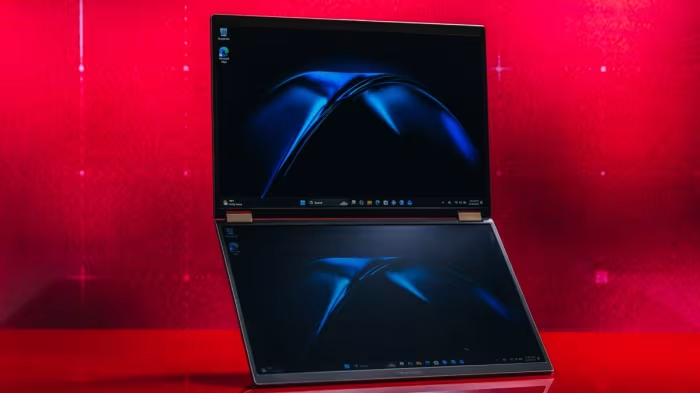
ViewSonic VG1457 Review
Consensus Review · 9 independent sources
ViewSonic VG1457
Worth considering, with trade-offs. Most reviewers like it, with a few trade-offs. Weigh them against what matters to you.
⚡ The Short Version
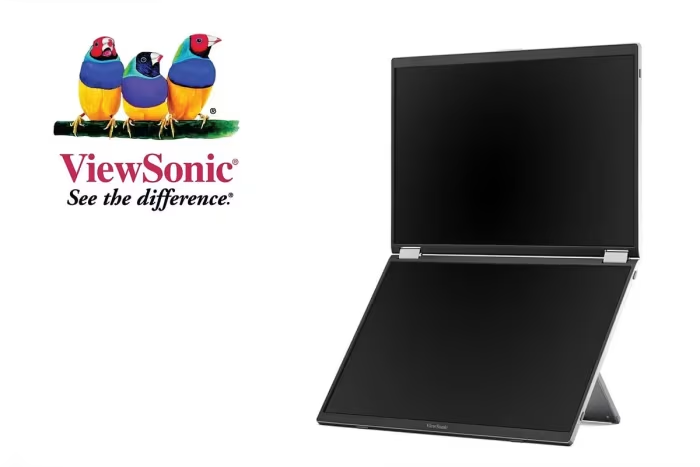
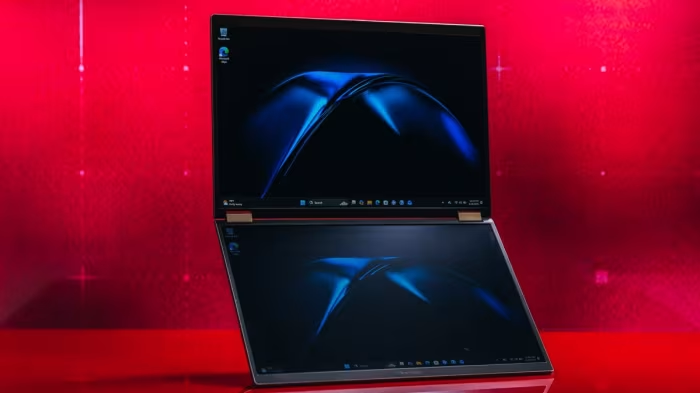
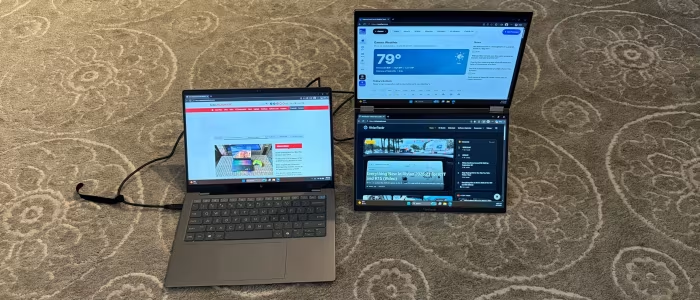
The ViewSonic VG1457 is a portable dual-screen setup built for those who need extra workspace on the go. While its design is clever and lightweight for mobile tasks, you'll find the display quality and brightness limited compared to more premium options. Most reviewers find it a helpful productivity tool despite these flaws, and it's worth considering if you prioritize a simple, single-cable connection for data. It's a fair value for the money if you can live with the screen trade-offs.
Things to weigh: Display
Reviews by market: India 6 · US 2 · 1 without a stated market. Prices, mileage and range figures follow each reviewer's own market.
Confidence: medium · 9 reviews · 1 hands-on
👍 ViewSonic VG1457 pros and cons
👍 Pros
- Good for home users
- Good value for money
- Slim and lightweight design
- Extra portable displays for data
- Single-cable dual-screen setup
👎 Cons
- Wimpy sound speakers
- Soft upper display
- Dual-panel Extend mode unavailable
- Displays max out at 65% coverage
- Does not reach advertised 250 nits brightness
Lighter items are smaller or less certain points.
💰 Value for Money Analysis
Reviewers generally find this to be a good value for the money, especially as an affordable dual-screen option. It serves as a modest-priced alternative to the HP Series 5 Pro.
4 of 9 sources commented on price or value.
📊 What Reviewers Say — Feature by Feature
3 features discussed across 9 sources. Each score blends what reviewers said about that feature with the overall score, so a feature with few mentions stays close to the overall verdict.
🔀 Rivals to compare
- HP Series 5 Pro (named by 4 of 9) [rival, premium] Editors' Choice-winning alternative More expensive single-screen alternative
- Acer PD163Q (named by 1 of 9) [rival] Less polished design and fussier, but more colorful.
- Asus ZenScreen Duo OLED (named by 1 of 9) [premium] Pricier dual-screen option
- Asus Zenscreen Duo OLED MQ149CD (named by 1 of 9) [premium] Visually superior but almost double the price.
- Asus non-OLED model (named by 1 of 9) [cheaper] Solid alternative with a much wider color gamut for $349.
- KYY (named by 1 of 9) [rival] Competitor in portable dual-display systems
Reasons are the reviewers' own. Spellings of the same product are merged.
🛒 Is it right for you?
✅ Buy this if…
- You want extra portable displays for data on the go
- You need a single-cable dual-screen setup
⚠️ Skip this if…
- You require color-accurate or bright displays
- Your laptop needs high-wattage charging
Is the ViewSonic VG1457 worth buying?
Strengths, weaknesses and who it suits
🎯 Who This Product Is For
Reviewer recommendations for different target audiences and use cases.
Real-world findings
Test results, marketing claims and known problems
🔍 Claims vs real life
While the manufacturer claims 250 nits of brightness, US reviewers found it only reached 210 nits. The static contrast ratio was measured at 1200:1, which is higher than the 800:1 figure listed in the specifications.
| Claim | Claimed | Measured by reviewers | Verdict |
|---|---|---|---|
| Display Brightness | 250 nits | 210 nits (one review) [US] | Below the claim (one review) |
| Static Contrast Ratio | 800 :1 | 1,200 :1 (one review) [US] | Beats the claim |
| Dynamic Contrast Ratio | 50,000,000 :1 | not measured | Not independently tested |
| Pass-through Power | 65 watts | not measured | Not independently tested |
| Speakers | 2 watts | not measured | Not independently tested |
| Weight & Portability | 2.8 lb | not measured | Not independently tested |
| sRGB color space coverage | 65% | not measured | Not independently tested |
Claims are the manufacturer's figures as quoted by reviewers. Measured values are what reviewers recorded themselves; test conditions differ between sources.
⚠️ Known problems
Reported by one source (not confirmed)
- Dual-panel Extend mode unavailable (major · 1 source)
- Displays max out at 65% coverage of the sRGB color space (moderate · unresolved · 1 source)
- Does not reach advertised 250 nits brightness (moderate · unresolved · 1 source)
- Image suffers at off-axis viewing angles reducing perceived contrast (moderate · unresolved · 1 source)
- Limitations with independent dual-display operation (moderate · 1 source)
- Neither screen hits 160 nits when powered by a laptop alone (moderate · unresolved · 1 source)
- Upper display appears softer than the lower display (moderate · unresolved · 1 source)
- Wimpy speakers do not go to full volume when powered from a laptop (minor · unresolved · 1 source)
How it compares
Alternatives and the previous model
The ViewSonic VG1457 is a generally recommended tool for boosting productivity with a dual-screen setup, provided you can overlook its mediocre display quality and weak speakers.
Most-named alternative: HP Series 5 Pro (named by 4 of 9 sources)
Nerd corner
Feature-by-feature chart, measurements, specs and the score maths. Skip this part if you only want the answer.
Technical note: US reviewers measured the display brightness at 210 nits when powered only by a laptop, which falls short of the manufacturer's 250 nits claim. One source confirmed a 60 hz refresh rate for the panels.
🖥️ Display
| Measurement | Result |
|---|---|
| Display Brightness | 210 nits (one review) [US] |
| Refresh rate | 60 hz (one review) [India] |
🔬 Technical takeaway
- Display Brightness: 210 nits (one review) [US].
- Refresh rate: 60 hz (one review) [India].
- Static contrast ratio: 1,200 :1 (one review) [US].
Numbers come from the reviewers' own tests and spec lists. Test conditions differ between sources.
🧮 How We Got This Score
In short: each of the 9 reviews is turned into a 0 to 10 number, stronger evidence counts for more, and the numbers are averaged.
- 1 reviews gave their own numeric score, and those count extra. The others are scored from their overall tone.
- First impressions and reviews without hands-on testing count less.
- If 80%+ of reviews lean the same way, the score moves by 0.5. This time: 0 (no direction reached 80% agreement).
- 56% of reviews lean mixed, and scores are close together (spread 1.5). Agreement: Low.
- How we got there: score 6.9/10, value signal 6.5/10 from 4 reviews, evidence moderate (9 reviews, 1 hands-on).
- Reviews are dated Aug 2026 to Oct 2026.
The arithmetic, for the curious
| Review type | Reviews | Avg value | Total weight | Value × weight |
|---|---|---|---|---|
| Numeric reviewer score | 1 | 7.5 | 1.50 | 11.25 |
| Strongly positive review | 2 | 8.5 | 2.00 | 17.00 |
| Mildly positive review | 1 | 7.5 | 1.00 | 7.50 |
| Mixed review | 5 | 5.0 | 2.50 | 12.50 |
| All reviews | 9 | 7.00 | 48.25 |
Raw average = 48.25 ÷ 7.00 = 6.9. Consensus adjustment 0 gives the final 6.9.
Calculated in code from structured data, with no manual adjustments.
How much to trust this
What these conclusions are based on
Based on 9 usable reviews: 1 hands-on, 0 first impressions, 1 with a numeric score, 2 with measured results. Evidence strength: moderate.
Reviewer recommendations: 2 recommended, 1 conditional, 0 not recommended.
How sources were chosen: every matching review in our collection is used, newest first.
📚 Sources Analysed
All 9 reviews were matched to 6 different sites.
Reviews by market: India 6 · US 2 · 1 without a stated market. Prices, mileage and range figures follow each reviewer's own market.
Last updated: 8 Nov 2026 · based on 9 reviews dated Aug 2026 – Oct 2026.