BYD Shark 6 Review
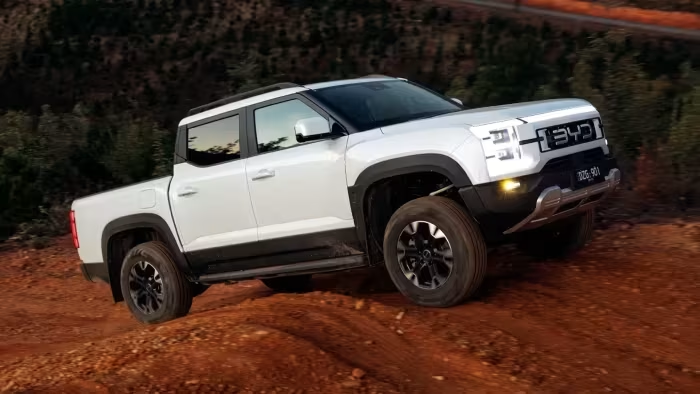
BYD Shark 6
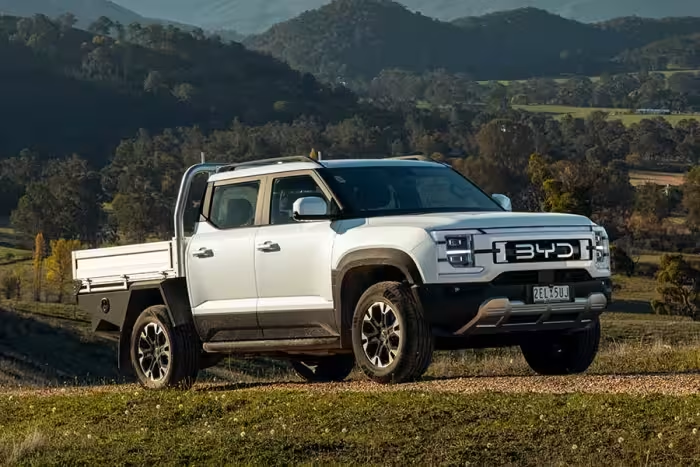
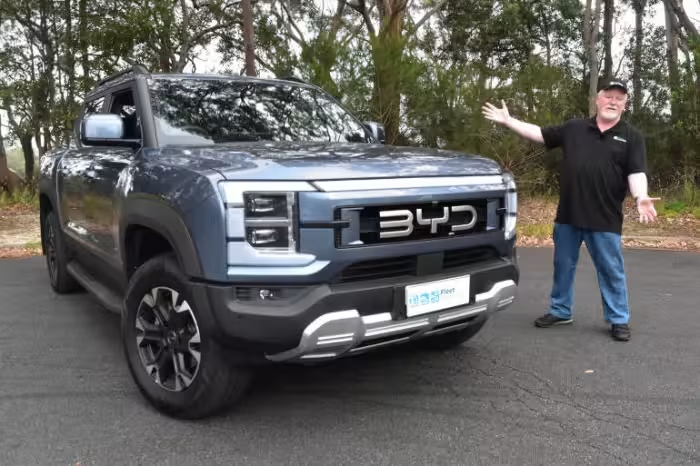
A powerful, high-tech plug-in hybrid dual-cab ute that prioritizes premium cabin comfort and on-road refinement over traditional heavy-duty workhorse capability.
How This Score Is Calculated
- Sources analysed: 22 reviews
- Explicit scores: 14 sources (weighted 1.5×)
- Sentiment-only: 8 sources (weighted 1.0×)
- Split: 16 Positive · 4 Mixed · 2 Negative
- Raw weighted average: 7.8
- Formula: Σ(score × weight) ÷ Σ(weight)
- Review period: 2025-2026
- Value sources: 12 of 22 mentioned price or value
- Final score: 7.8/10
Algorithmically calculated from source data. No manual adjustments.
- Most reviewed featurePowertrain (22/22)
- Most praisedOn-road comfort
- Most criticisedPayload capacity
- Reviewer consensus levelHigh
- Avg explicit reviewer score7.8/10
- Value for moneyGood Value (7.5/10)
The BYD Shark 6 is a groundbreaking plug-in hybrid ute that delivers a premium, SUV-like driving experience, standing out for its quiet cabin and impressive acceleration. While it successfully matches key rivals with a 3,500kg towing capacity in the Performance trim, it struggles with payload limitations and lacks the rugged off-road articulation of traditional diesel competitors. It is best suited for urban lifestyle users and fleets rather than heavy-duty off-road or commercial work.
🔧 Key Specifications
Specifications sourced from reviewer mentions. Verify with manufacturer for complete details.
- Powertrain: 2.0-litre Plug-in Hybrid (PHEV)
- Combined Output: Up to 350kW / 700Nm
- Display: 15.6-inch rotatable touchscreen
- Towing Capacity: 2,500kg (Premium) / 3,500kg (Performance)
- Charging: 40kW DC fast charging
- V2L: Supported (Vehicle-to-Load)
- Safety: 5-star ANCAP rating
- Kerb Weight: 2,710kg
💲 Price Range
$55,900 – $69,990 AUD/NZD
Prices sourced from reviews. Check current retailer pricing.
📊 What Reviewers Say — Feature by Feature
8 features evaluated across 22 sources.
👍 Key Strengths
- Premium, SUV-like interior comfort
- Excellent straight-line acceleration
- Competitive 3,500kg towing capacity
- Advanced V2L power functionality
👎 Key Weaknesses
- Below-average payload capacity
- Intrusive driver assistance software
- Firm ride on uneven surfaces
- Fuel efficiency drops when battery depleted
💰 Value for Money Analysis
Reviewers view the Shark 6 as a compelling value proposition, offering high-end tech and performance at a price point that undercuts major hybrid competitors like the Ford Ranger PHEV. It is consistently described as a 'premium' experience for the money.
12 of 22 sources commented on price or value.
⚡ Where Reviewers Disagreed
The following areas saw meaningful disagreement across sources.
- Ride Quality: 12 sources praised it as 'SUV-like' and comfortable, while 8 sources criticized it as 'firm' or 'uncomfortable' over bumps, likely depending on tire choice and road surface.
🎯 Who This Product Is For
Reviewer recommendations for different target audiences and use cases.
🛠️ Best Use Cases
- Daily CommutingThe smooth EV-only operation and quiet cabin make it an exceptional daily driver.Great
- TowingCapable of 3,500kg in Performance trim, but efficiency suffers on long hauls.Good
- Off-Road Light-DutyCrawl mode helps, but limited by design compared to dedicated 4x4s.OK
🔀 Alternatives Mentioned by Reviewers
Maximise this list. Include EVERY single competitor, rival, or alternative product mentioned in any of the source reviews.
- Ford Ranger PHEV — Frequently compared as the primary, more expensive rival; reviewers note the Shark 6 offers better value, while the Ranger retains a more traditional 'work-truck' feel.
- GWM Cannon Alpha PHEV — Often positioned as a direct price competitor; the Shark 6 is generally noted to have superior power and interior refinement.
- Toyota HiLux — The benchmark for reliability and work capability; reviewers suggest the Shark 6 is a 'pavement princess' by comparison but offers a far better daily driving experience.
- JAC Hunter PHEV — A budget-focused alternative; praised for affordability but criticized for a less refined cabin and weaker real-world performance compared to the Shark 6.
- Isuzu D-MAX — Used as a reference point for heavy-duty capability; the Shark 6 matches its 3.5t towing but lacks the mechanical durability for extreme work.
Alternatives sourced exclusively from reviewer mentions.
🛒 Buyer's Guide
✅ Buy This If…
- You want a comfortable daily driver that happens to be a ute.
- You appreciate high-tech interiors and V2L capabilities.
- You want the power of a PHEV without the high price of established brands.
❌ Skip This If…
- You need a heavy-duty workhorse for remote, extreme off-roading.
- You frequently carry maximum payloads that require high durability.
- You are sensitive to intrusive driver-assistance software alerts.
⚠️ Things to Check Before Buying
- Check if the Performance trim's 3,500kg towing is necessary, as the Premium trim is rated for 2,500kg.
- Test drive to see if the touchscreen-only controls for major functions are distracting for your specific use.
- Consider the impact of tire choices (e.g., mud tires) on overall cabin noise and ride quality.
📈 Sentiment Trends Over Time
Reviews span 2025-2026. The following changes were detected:
- Towing & Capability — Initial reviews focused on the vehicle's limitations, while newer Performance-trim reviews highlight the successful upgrade to 3,500kg capacity.
The BYD Shark 6 is an impressive, high-tech alternative to the traditional diesel dual-cab, excelling in comfort and daily usability. While it doesn't replace a rugged, mechanical work truck for heavy-duty commercial use, it provides a superior cabin and refined driving experience that most lifestyle buyers will love. For those who prioritize technology and comfort over raw, heavy-duty utility, it is a fantastic value pick.
Top Alternative: Ford Ranger PHEV — Choose this if you need a more established work-oriented platform with higher payload durability.
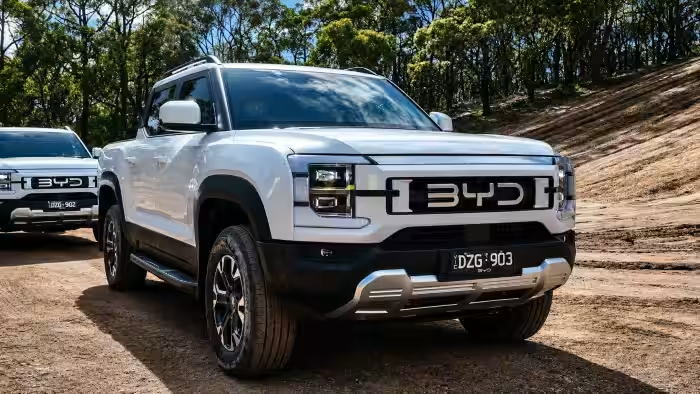
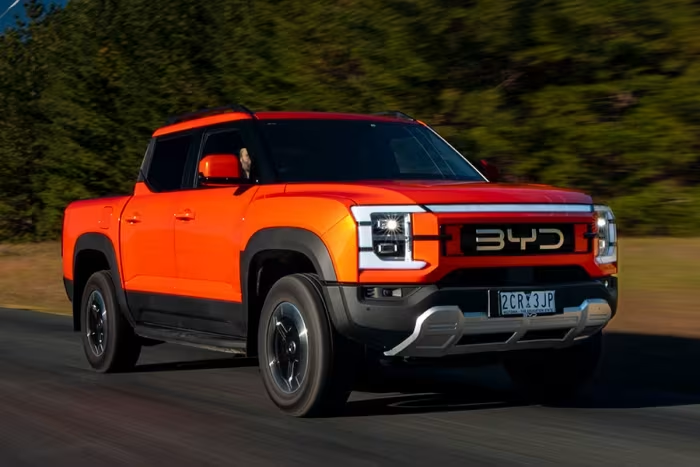
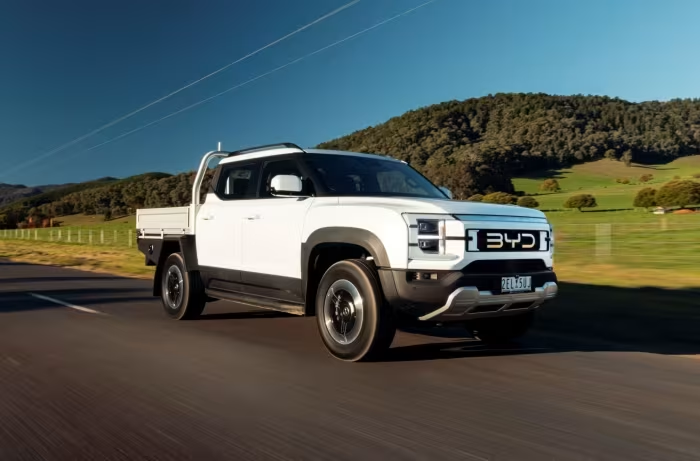
Reviewer Perspectives & Source Breakdown
2026 BYD Shark 6 review: Australian first drive - drive.com.au...
Price: ₹31,00,000 - ₹35,00,000 (Approximate equivalent)
The BYD Shark 6 offers a compelling, well-trimmed plug-in hybrid alternative with increased towing capacity and new trim options. However, it is held back by intrusive driver assistance systems and a ride quality that feels overly firm.
Pros
- Well-trimmed and high-quality interior
- Improved 3500kg towing capacity
- Handles like a car on paved roads
Cons
- Annoying driver assistance systems
- Firm and uncomfortable ride over bumps
- Less refined than a traditional ute off-road
JAC Hunter 2026 review Australia: New plug-in hybrid dual-cab pick-up li...
The 2026 JAC Hunter is a new plug-in hybrid dual-cab pick-up entering the Australian market to compete with the BYD Shark 6.
Pros
- Plug-in hybrid powertrain
- Dual-cab utility capability
Cons
- Competitive segment pressure
JAC Hunter 2026 review Australia: New plug-in hybrid dual-cab pick-up li...
The 2026 JAC Hunter is a new plug-in hybrid dual-cab ute entering the Australian market to compete directly with the BYD Shark 6.
Pros
- Efficient plug-in hybrid powertrain
- Competitive dual-cab utility segment
Cons
- Faces strong competition from BYD
JAC Hunter 2026 review Australia: New plug-in hybrid dual-cab pick-up li...
The JAC Hunter 2026 is a new plug-in hybrid dual-cab ute entering the Australian market to challenge the BYD Shark 6. It represents an emerging segment of electrified pickup trucks for local buyers.
Pros
- Efficient plug-in hybrid powertrain
- Competitive dual-cab utility design
Cons
- Faces strong competition from BYD Shark 6
2026 JAC Hunter PHEV Review: Australia's cheapest PHEV ute targets BYD S...
The JAC Hunter PHEV offers a compelling, affordable entry into the hybrid ute segment with solid local chassis tuning and off-road capability. However, its real-world performance falls short of headline figures, and the cabin feels modest compared to larger, more established rivals.
Pros
- Highly affordable sub-$50,000 price point
- Impressive 100km electric-only range
- Capable off-road with locking differentials
- Refined local Australian chassis tuning
Cons
- Powertrain feels lethargic compared to claimed outputs
- Interior cabin space is smaller than key rivals
- Lacks premium interior features and refinement
- Inconsistent throttle response at low speeds
Page 3 of 3