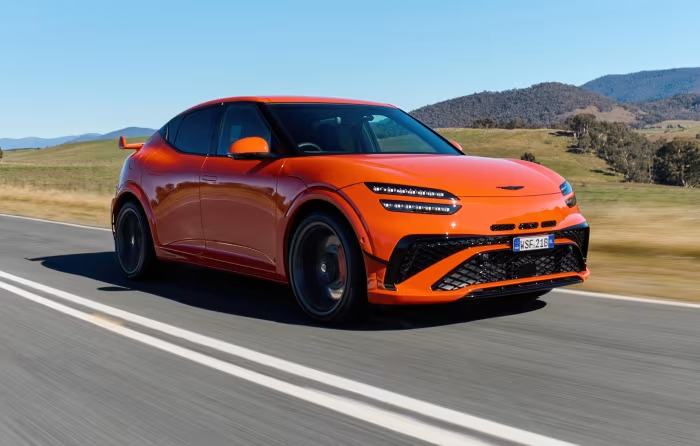
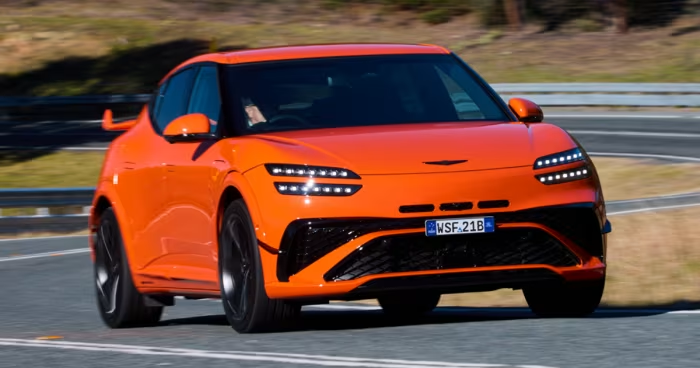
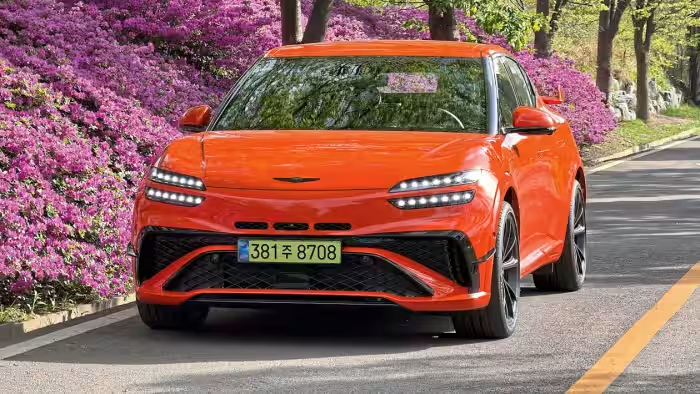
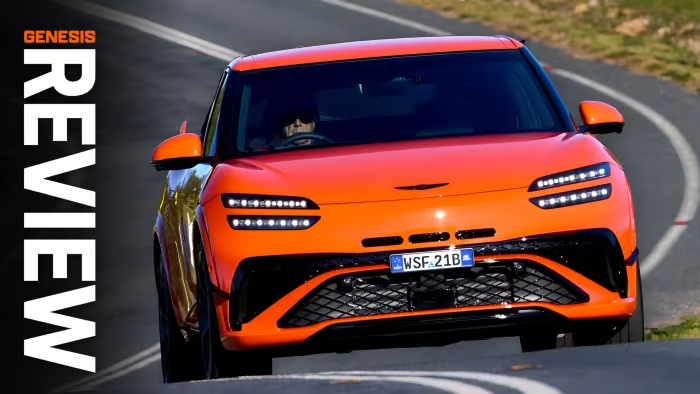
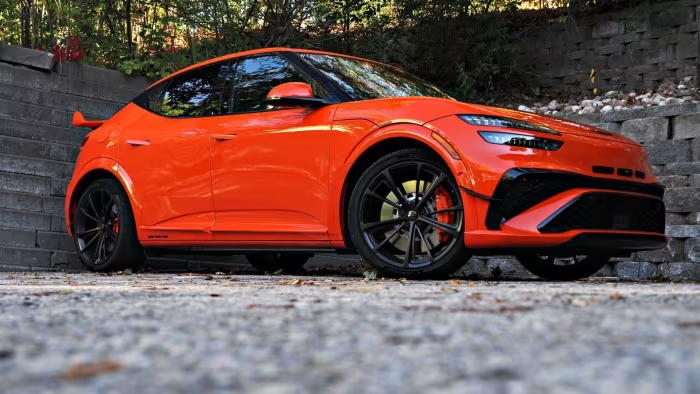
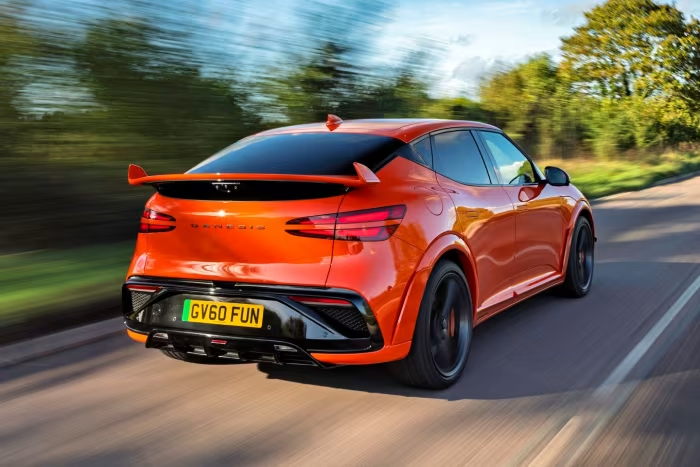
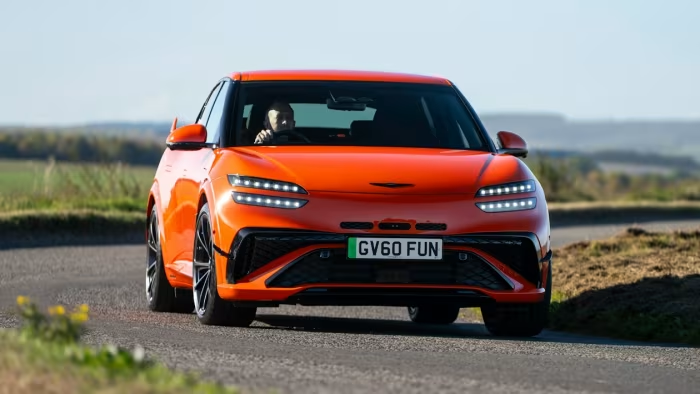
Genesis GV60 Magma Review
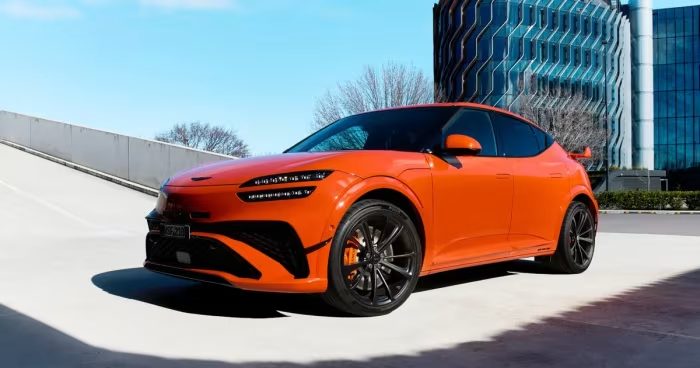
Consensus Review · 9 independent sources
Genesis GV60 Magma
Worth considering, with trade-offs. Reviewers mostly like it, but find the price hard to justify.
⚡ The Short Version
The Genesis GV60 Magma is a highly capable performance electric SUV that prioritizes a luxurious cabin and engaging handling. While it delivers impressive power, you should be aware that it comes with a premium price tag that many reviewers find difficult to justify. It suits enthusiasts looking for a distinctive and interactive driving experience, though the limited range may require planning for longer trips.
Things to weigh: Value for Money
Reviews by market: India 3 · US 2 · UK 2 · Australia 2. Prices, mileage and range figures follow each reviewer's own market.
Confidence: high · 9 reviews · 5 hands-on
👍 Genesis GV60 Magma pros and cons
👍 Pros
- Wieldy size handling
- Roomy cabin interior Space
- Vibrant hue design
- Blistering acceleration performance
- Adaptive dampers ride Comfort
👎 Cons
- Driver assist features are over-beepy
- Poor real-world energy efficiency
- Weak value for money
- 320km range battery Life
- Tepid straight line performance
Lighter items are smaller or less certain points.
💰 Value for Money Analysis
Extremely expensive at over $130,000. Delivers exceptional performance and luxury features for the price. Cheaper to run than a heavy diesel on long trips.
9 of 9 sources commented on price or value.
📊 What Reviewers Say — Feature by Feature
7 features discussed across 9 sources. Each score blends what reviewers said about that feature with the overall score, so a feature with few mentions stays close to the overall verdict.
🔀 Rivals to compare
- Hyundai Ioniq 5 N (named by 9 of 9) [rival, cheaper] Shares much of the same tech and blistering performance with a different interior styling. Offers identical performance and mechanics for ten thousand pounds less. Reviewers favoured it for battery.
- Hyundai Ioniq 6 N (named by 3 of 9) [rival, cheaper] Slipperier shape with slightly better range and lower price.
- Alpine A390 GTS (named by 1 of 9) [cheaper] Lower starting price but significantly less powerful. Reviewers favoured Genesis GV60 Magma for performance.
- Kia EV6 GT (named by 1 of 9) [cheaper]
- Porsche Macan 4 (named by 1 of 9) [rival] Priced similarly or less but offers significantly less power. Reviewers favoured Genesis GV60 Magma for performance.
- Porsche Macan 4S Electric (named by 1 of 9) [rival] Offers superior do-it-all crossover deftness and interior quality.
Reasons are the reviewers' own. Spellings of the same product are merged.
🛒 Is it right for you?
✅ Buy this if…
- You want a high-performance electric vehicle with luxury styling
- You need rapid DC charging capabilities for road trips
- You enjoy engaging handling and simulated gear shifts
- You want a distinctive, interactive high-performance EV.
⚠️ Skip this if…
- You're on a strict budget
- You require long driving ranges without frequent charging stops
- You're annoyed by strict driver monitoring systems
- You need maximum battery range per charge.
⚠️ Known problems
Reported by one source (not confirmed)
- Driver assist features are over-beepy, over-invasive, and nannying (moderate · unresolved · 1 source)
- Poor real-world energy efficiency (moderate · unresolved · 1 source)
- 27-inch infotainment/driver display proved laggy (minor · unresolved · 1 source)
Is the Genesis GV60 Magma worth buying?
Strengths, weaknesses and who it suits
🎯 Who This Product Is For
Reviewer recommendations for different target audiences and use cases.
Real-world findings
Test results, marketing claims and known problems
🔍 Claims vs real life
| Claim | Claimed | Measured by reviewers | Verdict |
|---|---|---|---|
| Range | 344.5 miles | 399 miles (one review) [US] | Beats the claim |
| Energy Consumption | 21.5 kwh/100km | 22 kwh/100km (one review) [US] | Holds up |
| Performance | 164 mph | not measured | Not independently tested |
| Power | 641 bhp | not measured | Not independently tested |
| Torque | 583 lb ft | not measured | Not independently tested |
| Battery Life | 84 kwh | not measured | Not independently tested |
| 0 To 100 Kilometres An Hour Sprint | 3.5 s | not measured | Not independently tested |
| 0-62 Time | 3.4 secs | not measured | Not independently tested |
| 0-62mph | 3.4 s | not measured | Not independently tested |
| Boost Function Power Increase | 40 hp | not measured | Not independently tested |
| Charge Time | 18 mins | not measured | Not independently tested |
| Horsepower | 601 hp | not measured | Not independently tested |
| Power & Efficiency | 2.9 miles/kwh | not measured | Not independently tested |
| Weight & Portability | 2,240 kg | not measured | Not independently tested |
Claims are the manufacturer's figures as quoted by reviewers. Measured values are what reviewers recorded themselves; test conditions differ between sources.
🔋 Real-World Electric Range
| Measurement | Result |
|---|---|
| Battery Life | 205 kilowatts (one review) [US] |
How it compares
Alternatives and the previous model
The Genesis GV60 Magma is a luxurious and highly engaging performance SUV, but its high price and limited range make it a buy that requires careful consideration.
Most-named alternative: Hyundai Ioniq 5 N (named by 9 of 9 sources)
Nerd corner
Feature-by-feature chart, measurements, specs and the score maths. Skip this part if you only want the answer.
Technical note: Performance testing shows a mixed reception, with US reviewers noting a range testing speed of 125 kilometres a and one source reporting 205 kilowatts at 1% state of charge. While acceleration is generally praised as blistering, some sources describe the straight-line thrust as tepid.
⚙️ Performance
| Measurement | Result |
|---|---|
| range testing speed | 125 kilometres a (one review) [US] |
🔬 Technical takeaway
- Battery Life: 205 kilowatts (one review) [US].
- Average energy consumption: 23.3 kwh/100km (one review) [US].
- Energy added: 61 kwh (one review) [US].
- Energy consumption: 22 kwh/100km (one review) [US].
Numbers come from the reviewers' own tests and spec lists. Test conditions differ between sources.
🧩 Other Things Reviewers Mentioned
Range (2 of 9 sources)
🧮 How We Got This Score
In short: each of the 9 reviews is turned into a 0 to 10 number, stronger evidence counts for more, and the numbers are averaged.
- 1 reviews gave their own numeric score, and those count extra. The others are scored from their overall tone.
- First impressions and reviews without hands-on testing count less.
- If 80%+ of reviews lean the same way, the score moves by 0.5. This time: 0 (no direction reached 80% agreement).
- 67% of reviews lean positive, and scores are close together (spread 1.4). Agreement: Moderate.
- How we got there: score 7.4/10, value signal 4.3/10 from 9 reviews, evidence strong (9 reviews, 5 hands-on).
- Reviews are dated Jul 2026 to Oct 2026.
The arithmetic, for the curious
| Review type | Reviews | Avg value | Total weight | Value × weight |
|---|---|---|---|---|
| Numeric reviewer score | 1 | 8.0 | 1.50 | 12.00 |
| Strongly positive review | 2 | 8.5 | 2.00 | 17.00 |
| Mildly positive review | 3 | 7.5 | 3.00 | 22.50 |
| Mixed review | 3 | 5.0 | 1.50 | 7.50 |
| All reviews | 9 | 8.00 | 59.00 |
Raw average = 59.00 ÷ 8.00 = 7.4. Consensus adjustment 0 gives the final 7.4.
Calculated in code from structured data, with no manual adjustments.
How much to trust this
What these conclusions are based on
Based on 9 usable reviews: 5 hands-on, 0 first impressions, 1 with a numeric score, 2 with measured results. Evidence strength: strong.
Reviewer recommendations: 5 recommended, 4 conditional, 0 not recommended.
How sources were chosen: every matching review in our collection is used, newest first.
📚 Sources Analysed
All 9 reviews were matched to 9 different sites.
Reviews by market: India 3 · US 2 · UK 2 · Australia 2. Prices, mileage and range figures follow each reviewer's own market.
Last updated: 8 Nov 2026 · based on 9 reviews dated Jul 2026 – Oct 2026.